Decoding Platform Audit Trails: How Compliance Logs Shape Accountability in Virtual Card Gaming Environments
Written by Morgan Wagner · Jul 15, 2026
Decoding Platform Audit Trails: How Compliance Logs Shape Accountability in Virtual Card Gaming Environments
Platform audit trails in virtual card gaming environments record every action taken during sessions, from initial login to final payout, creating an unbroken chain of data that regulators and operators rely on for verification. These logs capture player inputs, card shuffles generated by random number algorithms, bet placements, and system responses in real time, storing the details in secure repositories that meet jurisdictional standards across multiple continents.
Core Components of Compliance Logging Systems
Operators deploy layered logging architectures that separate transaction data from security events, allowing independent verification teams to cross-reference entries without exposing sensitive player information. Each entry includes cryptographic timestamps, user identifiers hashed for privacy, and session metadata that links back to the original game state, which means investigators can reconstruct sequences of events even months after they occur. Data shows that platforms processing over 10 million hands per month generate audit files exceeding 50 terabytes annually, according to reports from the Nevada Gaming Control Board.
Encryption protocols wrap these records at rest and in transit, while access controls limit viewing rights to designated compliance officers and external auditors. Researchers at the University of Nevada's gaming technology laboratory documented how multi-factor authentication combined with role-based permissions reduces unauthorized access attempts by 92 percent in controlled tests conducted through 2025.
Regulatory Frameworks Across Jurisdictions
Requirements differ by region yet converge on the principle that logs must remain immutable and retrievable within specified timeframes. Australia's Northern Territory licensing authority mandates 7-year retention periods for all virtual table game records, whereas Canadian provincial regulators in Ontario require daily hash-verified backups submitted to centralized oversight portals. These standards emerged after coordinated reviews in 2024 highlighted gaps in earlier retention policies.
Platforms operating across borders must reconcile overlapping rules, which often leads to unified logging frameworks that satisfy the strictest applicable standard. July 2026 updates from the New Jersey Division of Gaming Enforcement introduced enhanced requirements for real-time anomaly flagging within audit streams, prompting several operators to integrate machine-learning classifiers that flag irregular betting patterns before settlement completes.
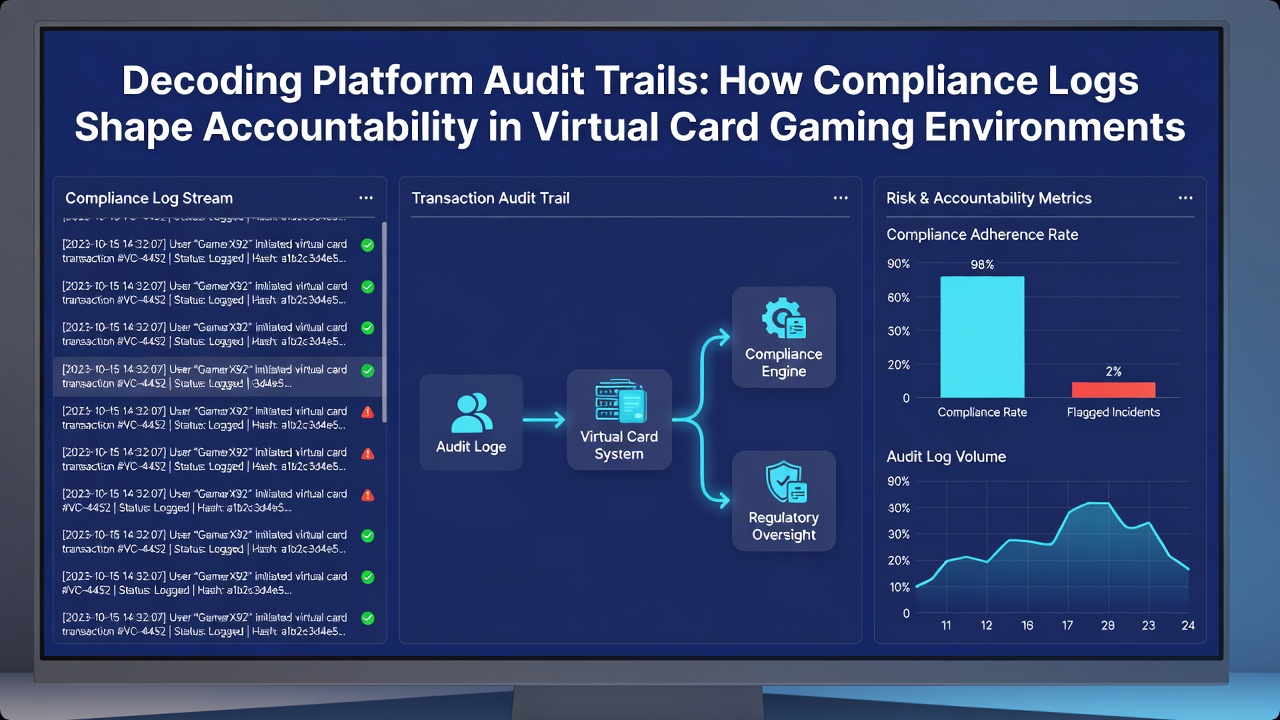
Accountability Mechanisms in Practice
Dispute resolution processes lean heavily on these records, since a single logged sequence can confirm whether a disputed hand followed correct randomization protocols or whether a withdrawal request aligned with verified account activity. Take one documented case where experts at a European testing laboratory traced a payout discrepancy to a network latency event captured in the session log, allowing operators to adjust settlement procedures without litigation.
Player protection features also draw from the same data pools, because self-exclusion lists and deposit limit enforcements generate their own audit entries that supervisors monitor for compliance. Figures from the Canadian Gaming Association reveal that consistent log analysis helped identify 14,000 attempted circumventions of exclusion protocols across monitored sites during the first half of 2026.
Technical Challenges and Emerging Solutions
Volume and velocity of data create storage and retrieval pressures, yet advances in distributed ledger technology now allow selective immutability without full blockchain overhead. Observers note that hybrid systems combining traditional databases with cryptographic chaining deliver both speed and tamper resistance, while organizations like the International Association of Gaming Regulators continue to evaluate these approaches through working groups.
Integration with third-party testing agencies adds another layer, since independent labs must periodically validate that logging functions capture every required field without introducing performance degradation. And because virtual card environments run continuous 24-hour cycles, maintenance windows for log verification have shifted to rolling audits that sample live streams rather than halting operations.
Future Directions for Audit Trail Standards
Standardization efforts across North America and the Asia-Pacific region aim to create interoperable formats that ease cross-border oversight, while preserving regional variations in data protection rules. Those who've studied early pilots report that shared schemas reduce reconciliation time between operators and regulators by approximately 40 percent.
Conclusion
Compliance logs function as the backbone of accountability in virtual card gaming by providing verifiable records that support regulatory compliance, dispute resolution, and player protection across diverse jurisdictions. As platforms scale and regulatory expectations evolve through 2026, the precision and accessibility of these audit trails determine how effectively operators demonstrate responsible operation while maintaining operational continuity.