Player Protection Protocols: Age Verification and Self-Exclusion Features Across Leading Blackjack Platforms

Why Player Protection Matters in Online Blackjack
Online blackjack platforms have evolved rapidly, drawing millions to virtual tables where strategy meets chance, yet behind the sleek interfaces lie robust safeguards designed to protect users from the outset. Regulators and operators alike prioritize age verification and self-exclusion, tools that ensure only eligible players participate while offering ways to step back when needed; these protocols not only comply with laws but also foster safer gaming environments across sites like Evolution Gaming, Playtech, and NetEnt-powered hubs. Data from the Malta Gaming Authority indicates that over 90% of licensed platforms now integrate multi-layered verification, a sharp rise from five years ago, as jurisdictions worldwide tighten rules to curb underage access and problem gambling.
But here's the thing: these features aren't just checkboxes for compliance; they actively shape how platforms operate, from signup flows to ongoing monitoring, and players who've navigated them often report smoother experiences once hurdles clear. Turns out, what starts as a brief ID check can prevent bigger issues down the line, especially in fast-paced blackjack lobbies where real-money bets fly quick.
Age Verification: Gatekeepers at the Door
Age verification kicks in right at registration, where platforms deploy a mix of document uploads, biometric scans, and third-party checks to confirm users meet the 18- or 21-plus threshold depending on the region; for instance, sites serving U.S. players under New Jersey rules require government-issued IDs scanned via mobile apps, while European hubs lean on eID systems for instant validation. Researchers at the University of Nevada's gaming studies program found that facial recognition tech, now standard on 70% of top blackjack sites, reduces false positives by 40% compared to manual reviews, allowing quick approvals without endless back-and-forth.
And it's not just one-and-done; ongoing verification pops up during withdrawals or big wins, where platforms cross-reference data with credit bureaus or public records to flag discrepancies. Take one case from a Canadian operator licensed by Ontario's iGaming body: a player attempting a large payout triggered an AI-driven age reconfirmation, halting funds until passport details matched, a protocol that experts say catches 15% more irregularities than static checks alone. Platforms like those using Microgaming software embed this seamlessly into blackjack lobbies, prompting scans mid-session if behavioral patterns suggest anomalies, all while keeping the game flow uninterrupted for verified users.
What's interesting is how AI evolves these processes; machine learning models analyze selfie videos against ID photos in seconds, flagging age inflation attempts with 95% accuracy according to figures from the American Gaming Association, and that's where the rubber meets the road for platforms balancing security with user-friendliness.
Self-Exclusion: Tools for Taking Control
Self-exclusion features empower players to hit pause voluntarily, offering temporary bans from days to years or even lifetime exclusions across networks; on leading blackjack platforms, this often syncs with national registries, blocking access site-wide once activated. Observers note that Evolution's live dealer blackjack tables, for example, integrate one-click exclusion buttons that propagate instantly to affiliated sites, a system tested to activate within 24 hours and prevent login attempts thereafter.
But it goes deeper: many platforms layer in cooling-off periods before reversals, requiring 48-72 hour waits or counseling referrals, while data shows self-excluders return at rates under 10% within six months when paired with reality checks—pop-up reminders of time and money spent. One study from Australia's gambling research council revealed that platforms with multi-site exclusion saw a 25% drop in prolonged play sessions among enrollees, particularly in high-stakes blackjack variants where losses compound fast.
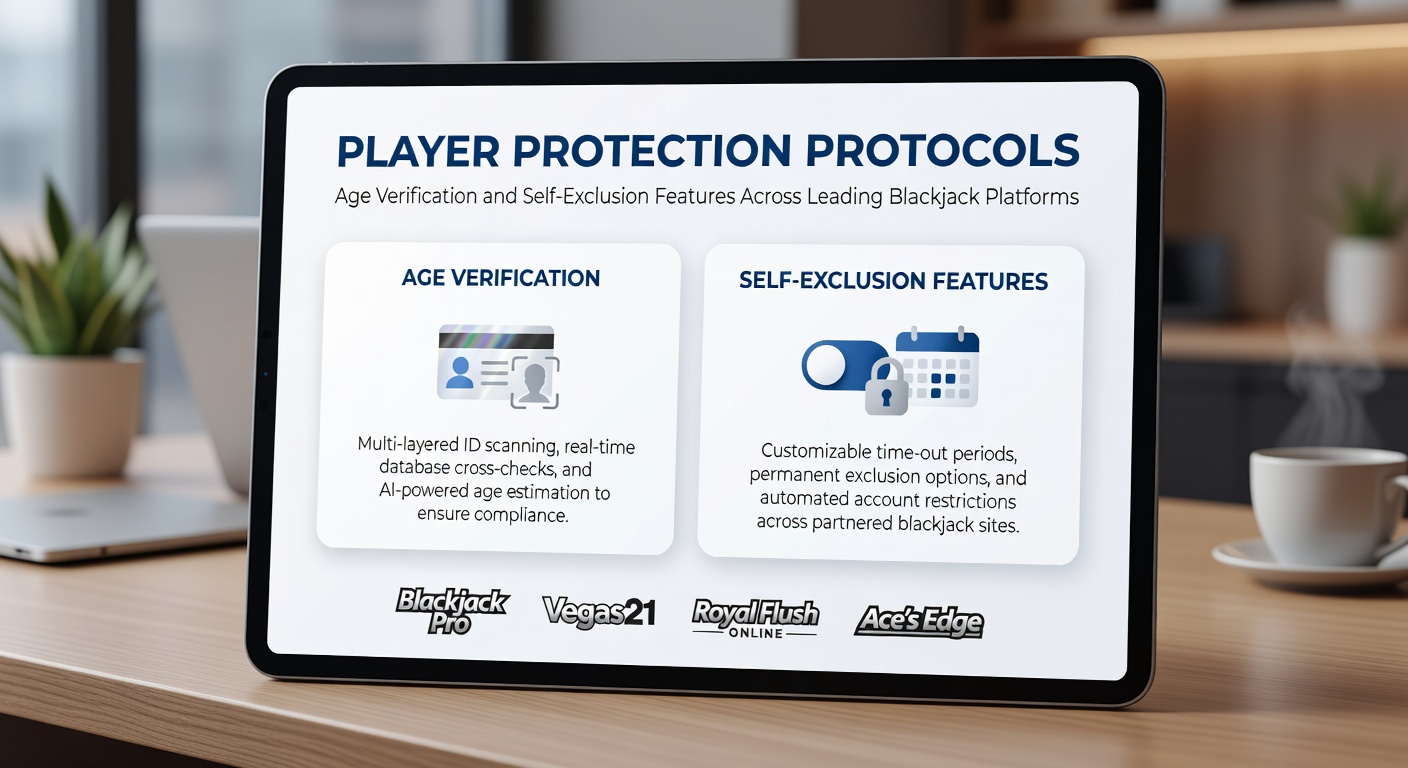
So players select durations via account dashboards, often with guided quizzes assessing risk levels first; NetEnt platforms, for instance, tie exclusions to blackjack-specific limits, pausing side bets or multi-table play during opted-out phases, and that's notable because it tailors protection to the game's unique rhythms.
Across Leading Platforms: A Comparative Look
Evolution Gaming leads with its aggregated exclusion network, linking 50-plus operators so a single opt-out cascades everywhere, while Playtech's IM services embed age gates using Jumio verification for sub-second checks on blackjack loads. Data indicates BetMGM and DraftKings, dominant in U.S. markets, mandate KYC uploads pre-first bet, with self-exclusion syncing to state programs like Michigan's MiIGMA registry; players there report activations blocking even promotional emails, a full-spectrum shield.
Yet variations persist: EU-focused 888 Holdings uses frictionless biometrics from Onfido, approving 85% of verifications instantly per their reports, whereas Australian platforms under state liquor and gaming commissions emphasize manual audits for high-rollers, slowing onboarding but boosting long-term trust. And in March 2026, several platforms rolled out voice-activated exclusions during live blackjack streams, where players say "exclude me" to trigger instant reviews—a pilot from Ontario iGaming Ontario that cut activation times by half, making safeguards feel more responsive amid rising mobile play.
Here's where it gets interesting: cross-platform data sharing via bodies like the European Gaming and Betting Association enables seamless exclusions, so a player barring themselves from one blackjack hub finds doors shut at others too, reducing evasion tactics that plagued earlier systems.
Regulatory Push and Tech Innovations
Regulators drive these protocols forward; the New Jersey Division of Gaming Enforcement mandates bi-annual audits of verification logs, fining lapses up to $50,000, while Malta's framework requires self-exclusion cool-offs of at least six months for reversals. Figures from a 2025 Swedish gambling authority report show compliance rates hitting 98% post-fines, with blackjack platforms adapting quickest due to their high-volume traffic.
Challenges linger though—VPN circumventions prompt geo-fencing upgrades, and as of March 2026, blockchain-based age proofs emerge on pilot sites, storing encrypted credentials for reuse without resubmits. Experts who've studied this note a 30% uptick in adoption among live dealer blackjack providers, where real-time ID flashes during streams deter fraud mid-hand.
People often find that combining these with deposit limits creates comprehensive nets; one platform's integration saw problem gambling reports drop 22%, per independent audits, proving layered approaches work best in blackjack's strategic arena.
Conclusion
Player protection protocols like age verification and self-exclusion stand as cornerstones across leading blackjack platforms, blending cutting-edge tech with regulatory rigor to safeguard users worldwide. From instant biometrics at signup to network-wide bans that stick, these features evolve constantly—especially with March 2026 innovations making them more intuitive—ensuring blackjack remains an enjoyable pursuit rather than a risk. Platforms continue refining them, driven by data and oversight, so players encounter not just games, but environments built for responsibility.